
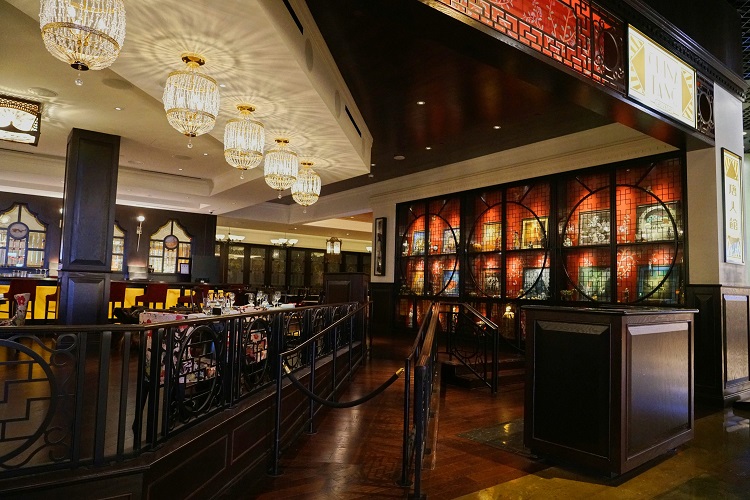
Much like observing the intricate patterns of an ant colony, one discovers that the ecosystem of a Chinese restaurant in Singapore reveals remarkable adaptations that have evolved over generations, creating a complex web of cultural exchange and gastronomic innovation that mirrors the very principles found in nature’s most successful communities.
The Biodiversity of Chinese Culinary Traditions
In studying the remarkable diversity within Singapore’s Chinese dining landscape, one observes patterns reminiscent of ecological niches in tropical rainforests. Each Chinese restaurant in Singapore occupies its own distinct space within the culinary ecosystem, much as different species have evolved to exploit specific environmental resources.
The Cantonese establishments represent the established canopy dwellers, traditional, refined, and occupying the prestigious positions within the dining hierarchy. Meanwhile, Szechuan venues function as the understory specialists, bringing heat and intensity that creates their microclimate of flavour. The Hokkien and Teochew restaurants operate like ground-level organisms, maintaining deep roots in local soil whilst drawing nourishment from ancestral traditions.
As one local food critic observed: “The beauty of Singapore’s Chinese dining scene lies not in competition, but in complementary evolution—each style filling a unique role in our city’s gastronomic ecosystem.”
Adaptation and Survival: The Singapore Mutation
The most fascinating aspect of studying Chinese restaurants in Singapore lies in observing how traditional recipes undergo what biologists might call “adaptive radiation.” Just as Darwin’s finches developed distinct beak shapes to exploit different food sources, Chinese cuisine in Singapore has undergone remarkable modifications to thrive in its new environment.
Consider these evolutionary adaptations:
- Localised ingredient integration: Native spices and tropical fruits merged with traditional preparations, creating hybrid dishes that could not exist elsewhere
- Climate-responsive cooking techniques: Lighter preparations and cooling elements adapted to equatorial conditions
- Multi-cultural pollination: Influences from Malay, Indian, and Western cooking styles create entirely new subspecies of dishes
- Preservation strategies: Traditional preservation methods modified for humid tropical conditions
The Social Structure of Dining Communities
The organisation of Singapore Chinese restaurants mirrors complex social structures observed in advanced animal societies. Family-run establishments operate like matriarchal elephant herds, where knowledge passes through generations, and each member plays a crucial role in collective survival.
The phenomenon of “zi char” stalls demonstrates what ecologists call “resource sharing behaviour.” These establishments function as communal feeding grounds where diverse groups gather, much like watering holes on the African savanna. The efficiency of service, the rapid turnover of tables, and the seamless coordination between kitchen and floor staff reveal an evolved social system of remarkable sophistication.
Chemical Communications and Sensory Ecology
From a sensory perspective, the Singapore Chinese dining experience represents a masterclass in chemical communication. The olfactory signals emanating from these establishments serve multiple functions, much like pheromones in the animal kingdom.
The aromatic compounds released during wok hei preparation function as long-distance attractants, drawing potential diners from considerable distances. The layered scent profiles communicate specific information about freshness, technique, and authenticity—a chemical language that regular patrons learn to interpret with remarkable precision.
As one veteran chef explained: “The wok breathes, and when you understand its language, you know exactly what story each dish is telling before it reaches the table.”
Seasonal Migrations and Feeding Patterns
The temporal patterns of Chinese restaurant Singapore patronage reveal cyclical behaviours reminiscent of seasonal migrations. During Chinese New Year, festival periods, and family celebrations, dining patterns shift dramatically, creating what behavioural ecologists would recognise as “resource pulses.”
These establishments have evolved sophisticated strategies to handle such fluctuations:
- Seasonal menu adaptations: Specialised offerings that align with cultural calendars
- Flexible seating arrangements: Rapid reconfiguration of space to accommodate varying group sizes
- Supply chain resilience: Relationships with multiple suppliers, ensuring ingredient availability during peak demand
- Staff deployment strategies: Training protocols that allow rapid scaling of service capacity
The Future Evolution of Tradition
Observing current trends in Singapore Chinese restaurants, one can predict future evolutionary trajectories with the same confidence a naturalist might forecast species adaptation to climate change. The integration of sustainable practices, plant-based alternatives, and technological innovations represents ongoing adaptation to changing environmental pressures.
The younger generation of chefs and restaurateurs demonstrates what evolutionary biologists call “behavioural plasticity”, the ability to modify inherited behaviours whilst maintaining core genetic identity. Traditional techniques persist whilst embracing innovations in presentation, service, and customer engagement.
Conclusion: A Living System
The study of Singapore’s Chinese dining landscape reveals a living, breathing ecosystem of remarkable complexity and resilience. Each establishment, from the humblest coffee shop to the most sophisticated dining room, contributes to a larger organism that has successfully adapted to local conditions while maintaining genetic links to ancestral origins.
The success of this culinary ecosystem demonstrates that tradition and innovation need not be opposing forces, but rather complementary strategies for long-term survival. As any field biologist knows, the most successful species are those that maintain essential characteristics whilst remaining flexible enough to adapt to changing circumstances, a principle perfectly embodied by every thriving Chinese restaurant in Singapore continues to nurture and sustain.

 Add a joy of best Taste